

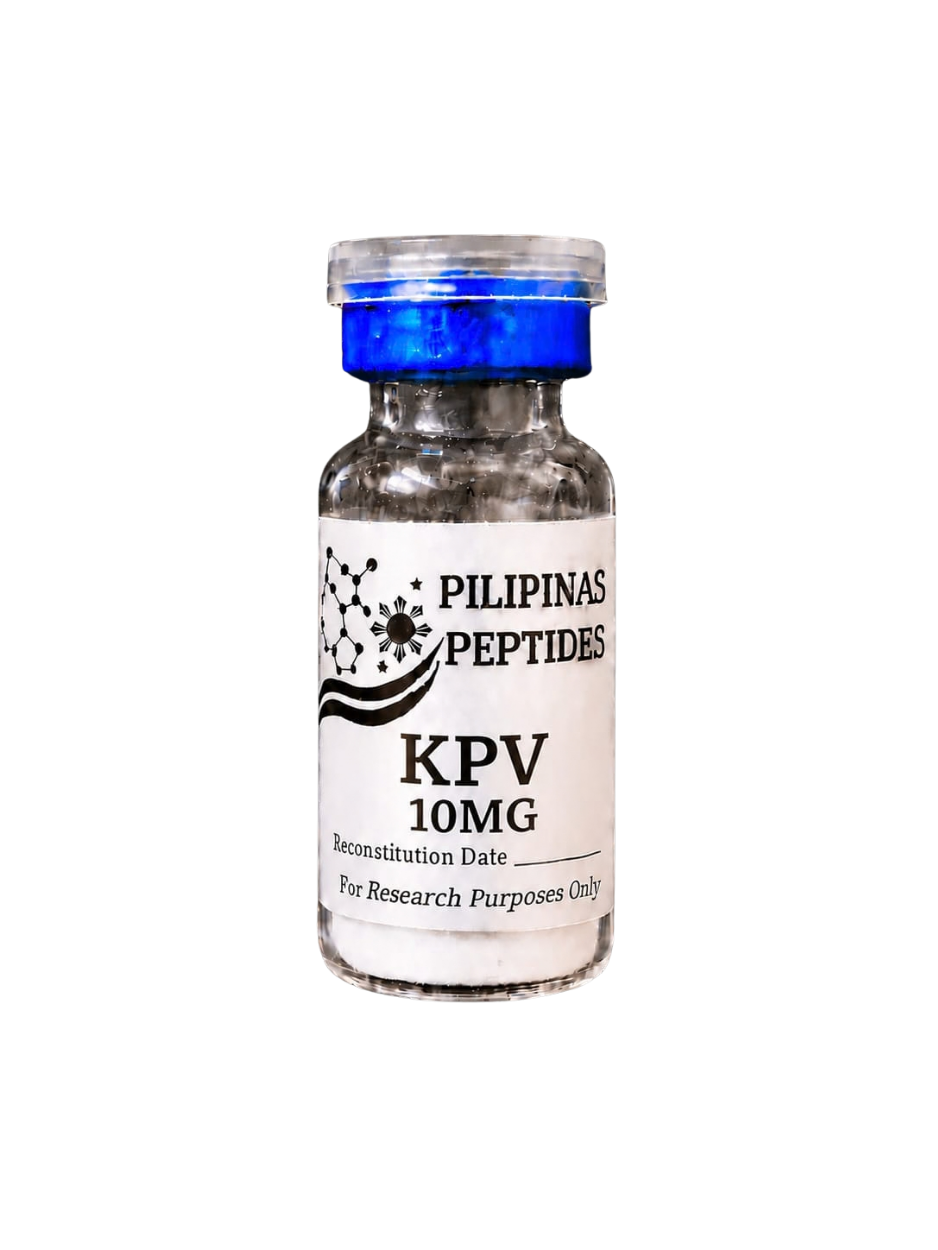
KPV 10mg – Research-Grade KPV in the Philippines
Buy KPV peptide in the Philippines from Pilipinas Peptides. Our research-grade 10mg vials are third-party tested and stocked locally in BGC.
What is KPV?
KPV is the three-amino-acid sequence Lys-Pro-Val, corresponding to residues 11–13 of alpha-melanocyte-stimulating hormone (α-MSH). Research found that this small fragment keeps much of α-MSH’s anti-inflammatory activity but lacks its pigment-stimulating (melanogenic) effects.
In cell and animal studies, KPV has been shown to reduce NF-κB activation and inflammatory cytokine production. In intestinal epithelial cells it is taken up through the peptide transporter PepT1, which has made it a focus of colitis and gut-inflammation models. It has also been studied in skin and wound-inflammation research.
KPV Research Applications
KPV is used in the following areas of laboratory research:
- NF-κB and inflammatory cytokine signaling
- Colitis and intestinal inflammation models
- PepT1-mediated peptide transport
- Skin and wound inflammation research
- Melanocortin-fragment pharmacology
KPV Specifications
| Synonyms | α-MSH (11-13), Lys-Pro-Val |
|---|---|
| Sequence | Lys-Pro-Val |
| Molecular formula | C16H30N4O4 |
| Molecular weight | ≈ 342.4 g/mol |
| Vial size | 10mg |
| Form | Lyophilized powder |
| Purity | Independently verified per batch (HPLC / MS) – see COA |
| Storage | −20 °C long term; 2–8 °C short term; protect from light |
Why Buy KPV from Pilipinas Peptides?
- Independent third-party testing: Every batch is sent to an independent laboratory (Freedom Diagnostics) for identity and purity analysis. The Certificate of Analysis (COA) is available for each batch.
- Nitrogen-purged handling: Vials are handled in a controlled workspace in BGC using a nitrogen-purge process that limits exposure to oxygen and moisture, the two main causes of peptide degradation.
- Stocked locally in the Philippines: Our inventory is held in BGC, Taguig. There are no international customs delays, and orders are fulfilled quickly within Metro Manila and nationwide.
- Real support from real people: Questions about a product, a COA or your order? Message us on WhatsApp and a member of our team will answer.
Storage & Handling
Store lyophilized (freeze-dried) vials in a freezer at −20 °C for long-term storage, or refrigerated at 2–8 °C for short-term use. Protect from light and moisture, and allow a vial to reach room temperature before opening to prevent condensation. Once reconstituted, keep the solution refrigerated at 2–8 °C and follow your laboratory’s protocol for stability.
KPV FAQs
Where can I buy KPV in the Philippines?
You can order KPV directly from Pilipinas Peptides. We keep stock in BGC, Taguig, so orders ship locally without international customs delays. Message us on WhatsApp if you have questions before ordering.
Does KPV affect pigmentation like α-MSH?
No. KPV keeps α-MSH’s anti-inflammatory activity but does not activate the melanocortin-1 receptor pathway that controls pigmentation.
Is KPV third-party tested?
Yes. Every batch of KPV we sell is independently tested for identity and purity, and a Certificate of Analysis (COA) is available for each batch.
How should KPV be stored?
Keep unopened lyophilized vials frozen (−20 °C) for long-term storage or refrigerated (2–8 °C) for short-term use, away from light and moisture. Keep reconstituted solutions refrigerated.
Is KPV approved for human use?
No. KPV sold by Pilipinas Peptides is supplied strictly for in-vitro and laboratory research. It is not for human or veterinary use and is not registered with the Philippine FDA.
Related research compounds: BPC-157, Klow Blend, GHK-Cu
For laboratory research use only. This product is not a drug, food, cosmetic or dietary supplement. It is not for human or veterinary use and has not been registered with or evaluated by the Philippine Food and Drug Administration. It is not intended to diagnose, treat, cure or prevent any disease. By purchasing, you confirm that you are 18 or older and will handle this product in accordance with applicable laws and laboratory safety practices.



Reviews
There are no reviews yet.